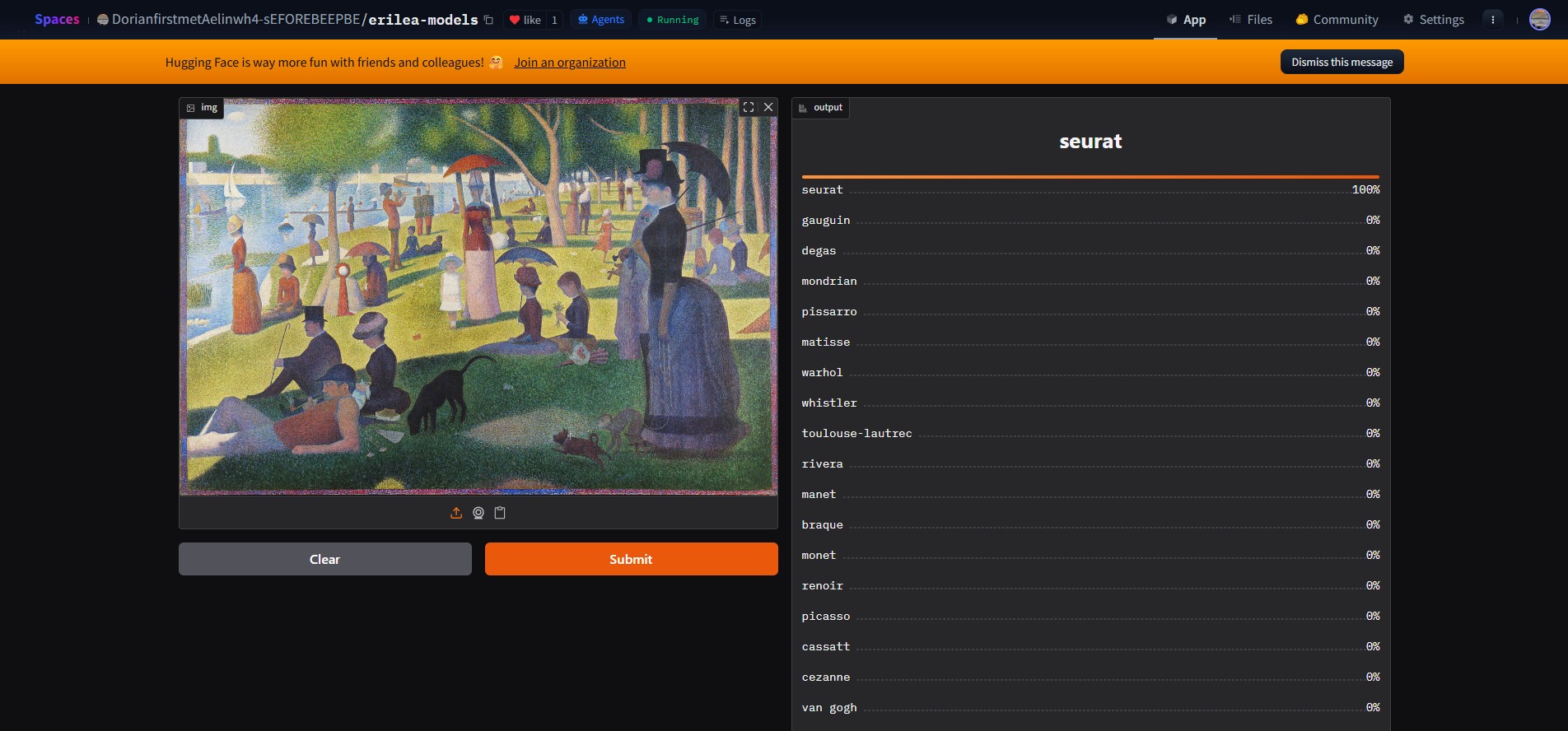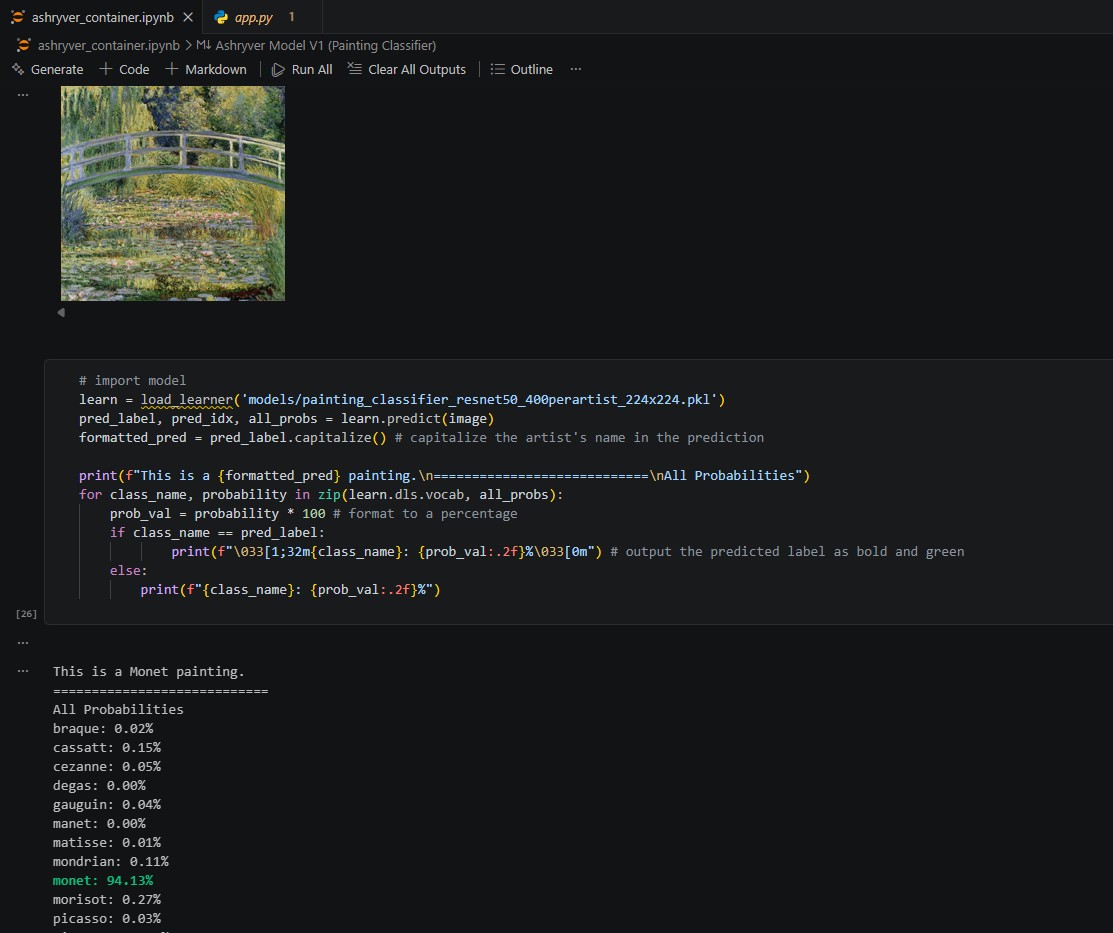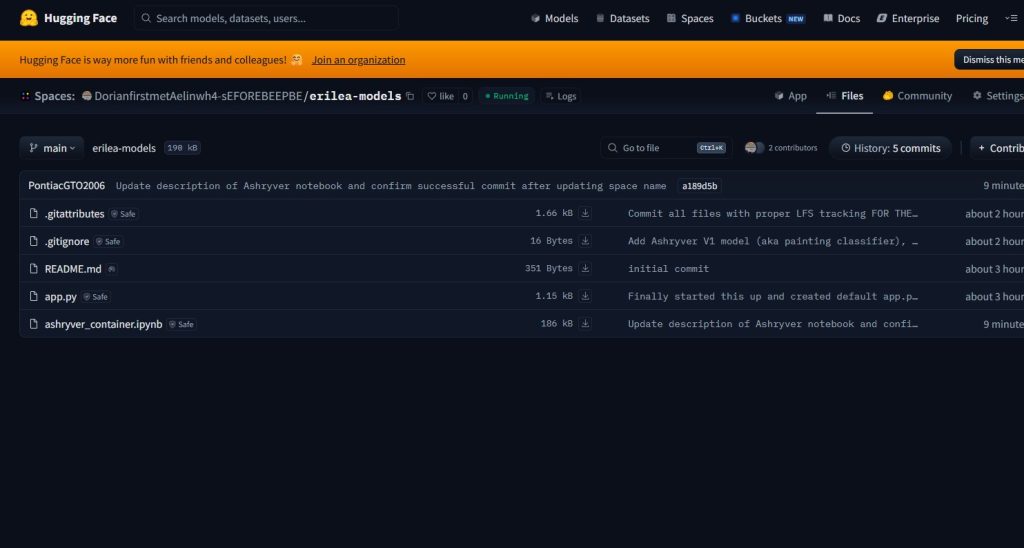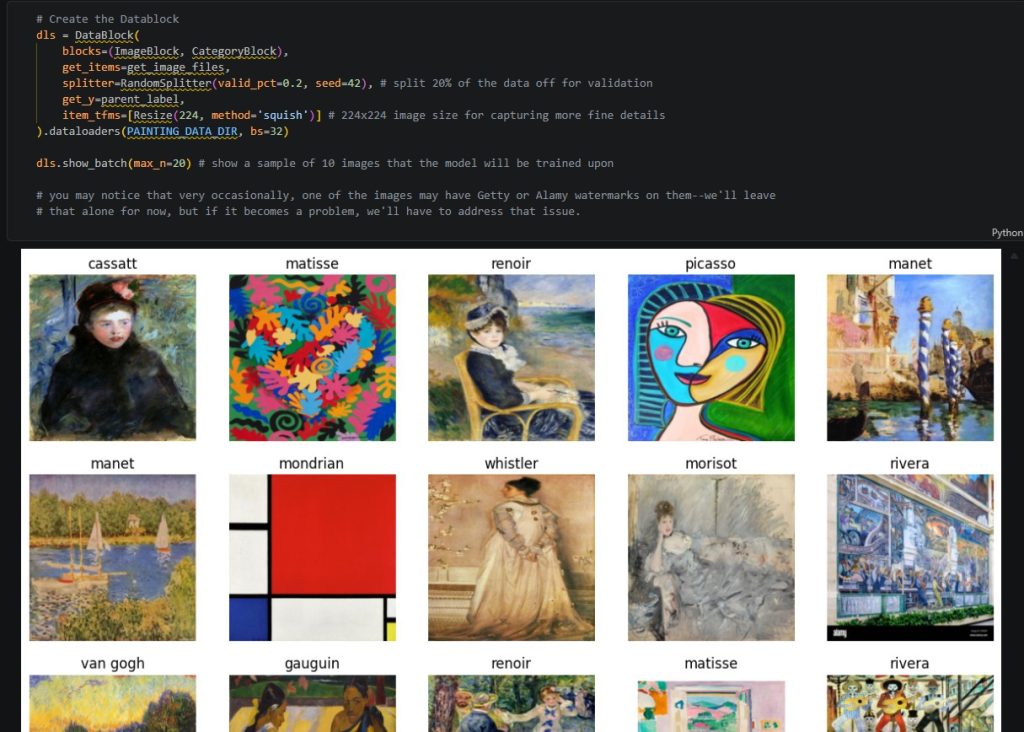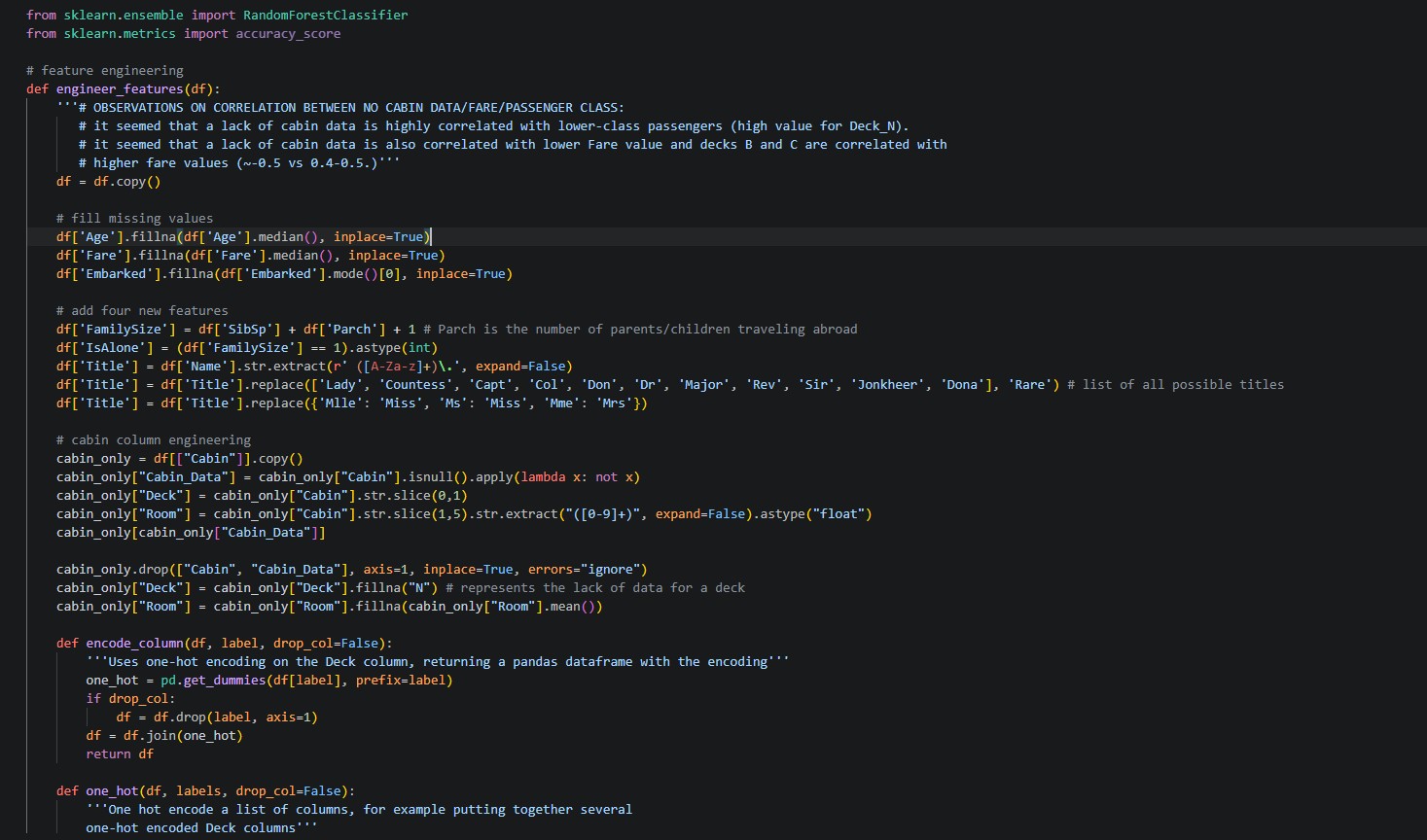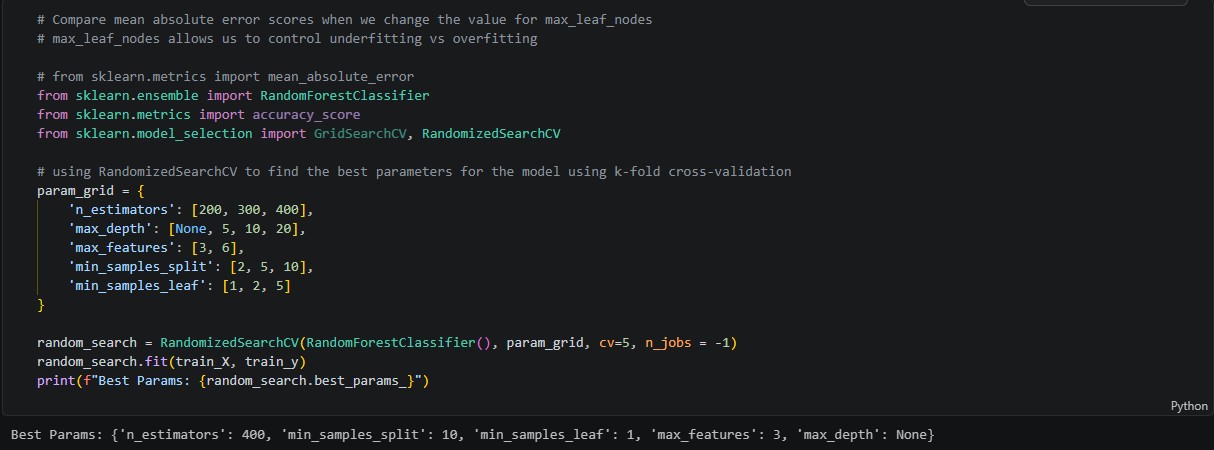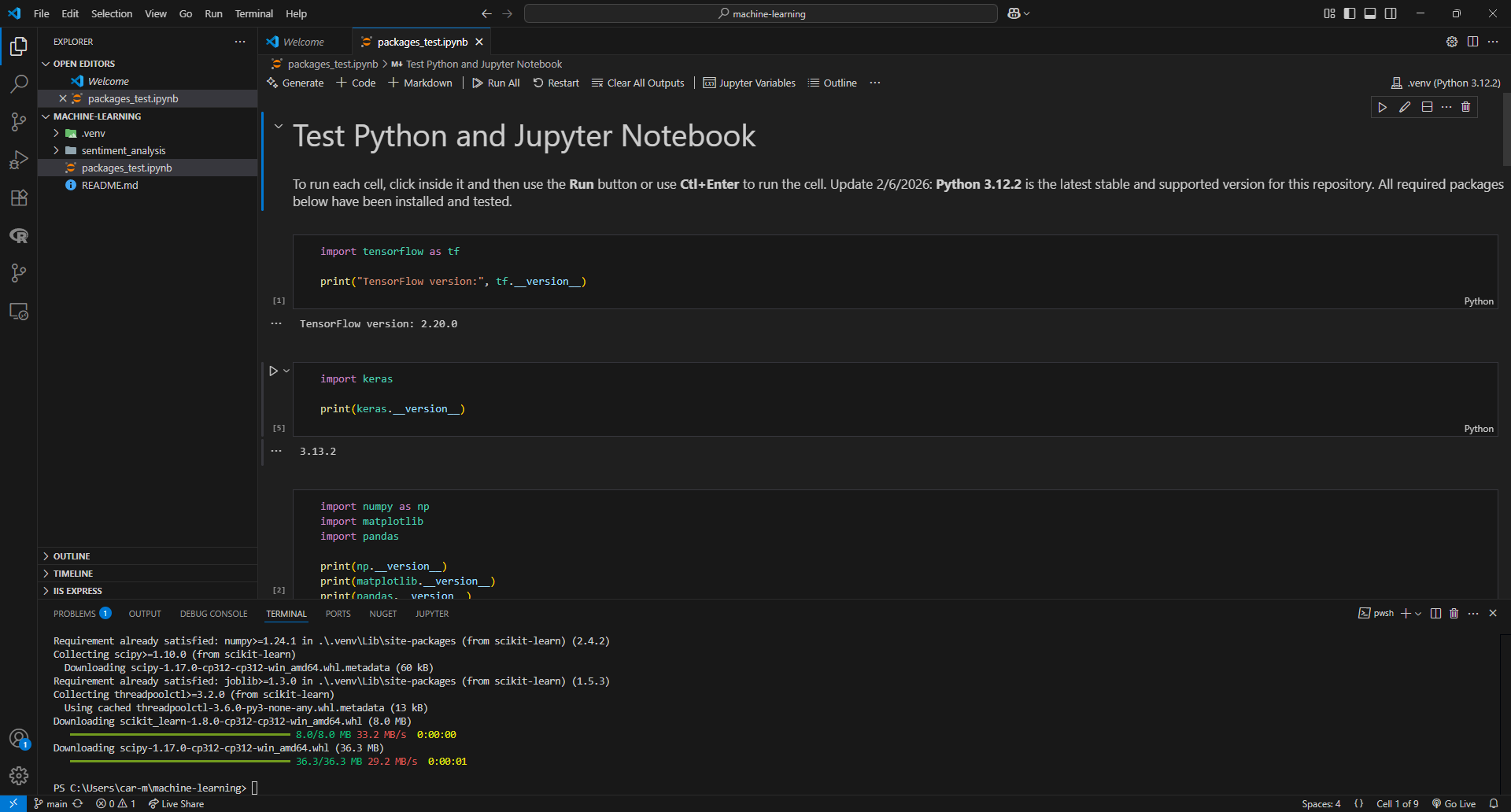
Welcome back to Discordant Harmony! It’s been a few weeks since the last update, but I’m now back with the September update on how various projects have been going. In this blog, I’ll discuss a new alternate reality game/narrative I’m working on, some new video editing projects, and new AI/machine learning endeavors including the Painting Classifier AI Project and Quarto sites.
AI, Machine Learning, and Portfolio Sites
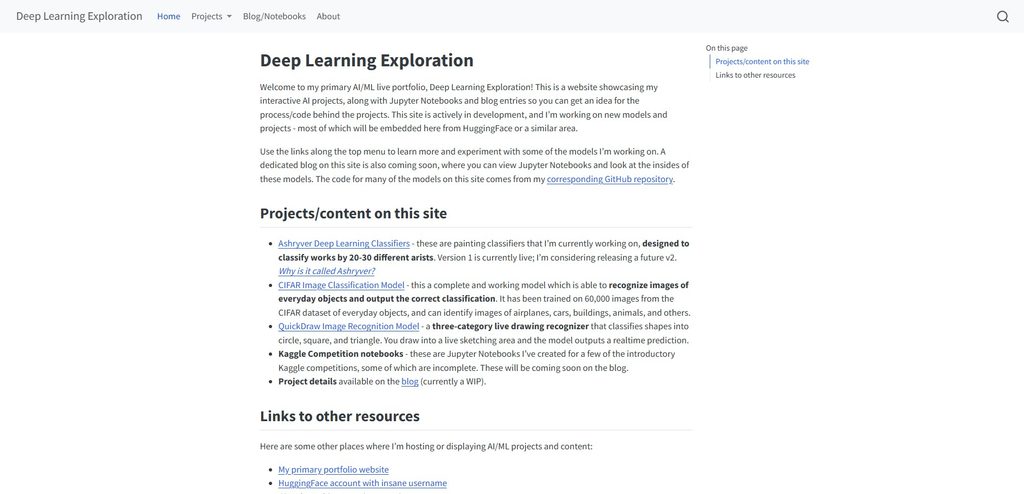
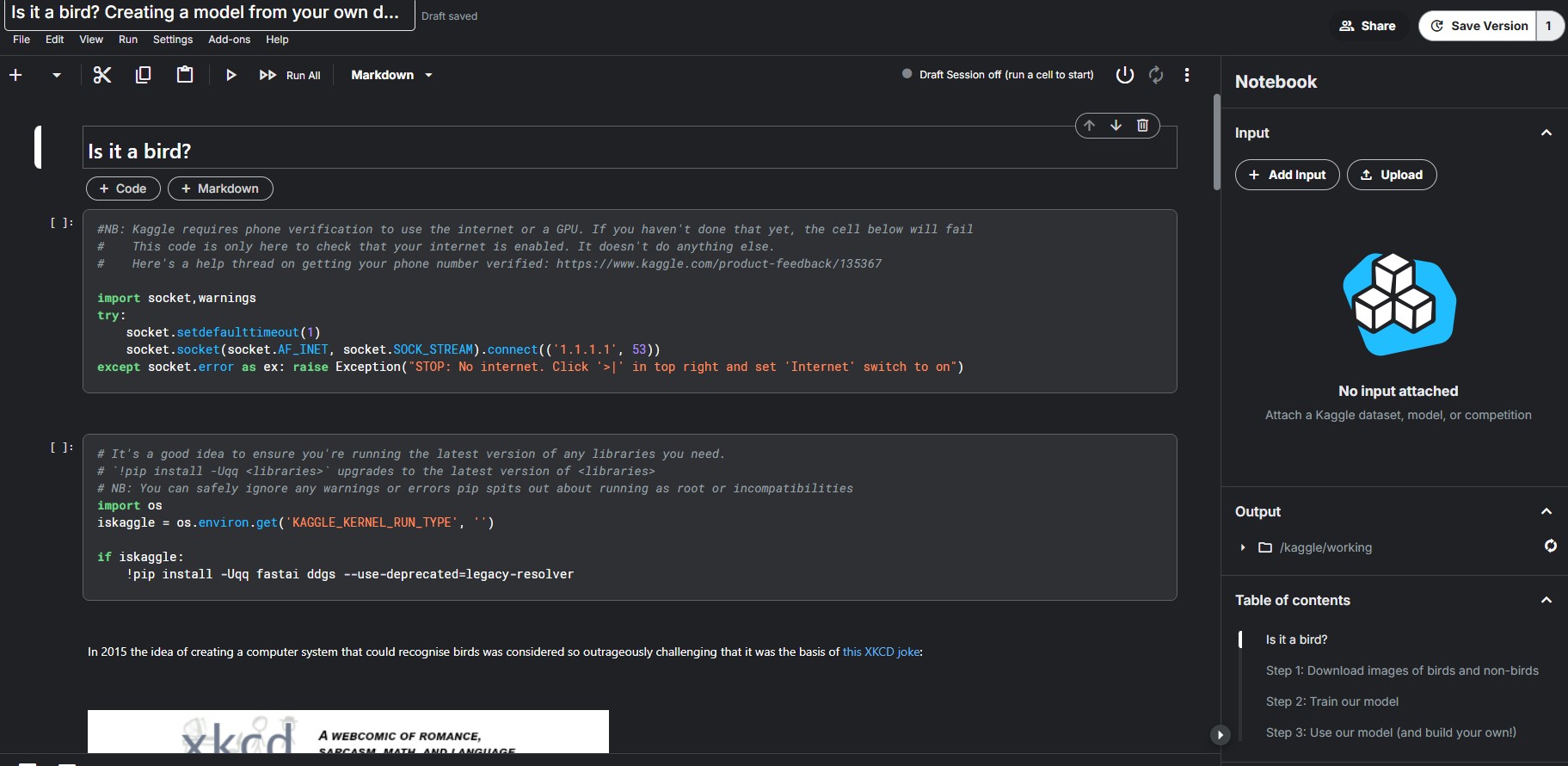
First up, I suppose, will be my various attempts at restarting the machine learning projects I’ve been working on. They have been sitting around for a couple of months now, ever since fast.ai broke something in their code and prevented users from building anything back at the end of June. Those issues have now been fixed, and I’ve moved away from trying to use the deprecated fastpages anyway to host live versions of my models. Instead, I discovered the much better successor to fast.ai called Quarto, which allows you to host Jupyter Notebooks, blogs, and model embeds through GitHub Pages.
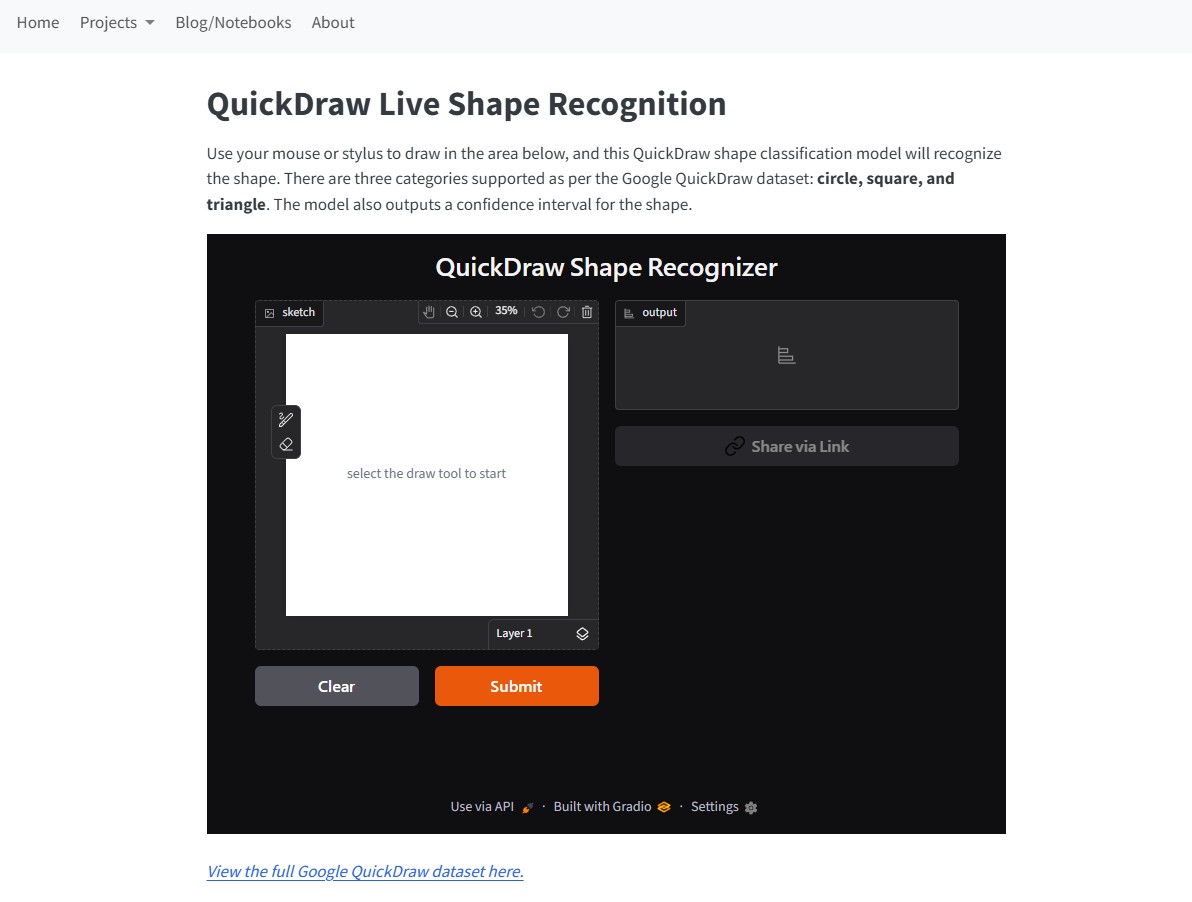
This is what I’ve been working on over the past week. I now have a live, working Quarto portfolio with the latest Ashryver Painting Classifier (via a HuggingFace embed) and, finally, the CIFAR-10 Image Classification Model I trained last year, during the inset event. Additionally, I’ve put up the QuickDraw Shape Recognition Model that I recently refurbished from August 2025, and it worked surprisingly well with the Gradio Sketchpad integration on HuggingFace. This is something that I’ve been working towards for quite a while–back in June, I stated that I was “really trying to move away from models that exist only within a Visual Studio Code window and require extensive amounts of effort on the part of the user to get it working on their own machine.” Well, that move has finally been made.
As of Thursday, I now have a working blog set up on the Quarto site, where I can add posts containing notebooks, code snippets, and anything else that allows me to do detailed data storytelling and visual analysis. The Quarto interface is a little bit clunky behind the scenes–you have to deal with both a .qmd page and an .html page and update both whenever you want to insert a blog. However, it’s much better than alternatives like Netlify or the deprecated fastpages if you want to showcase personal models (not production-ready content) and post blogs containing Jupyter Notebooks.
At the moment, I have no plans to host any of these models on large, production-ready sites like Vercel or ChatCode. This may come later if I find that I need more hosting space or interaction with users, but for now Quarto works perfectly fine for displaying these projects so people can actually use them. I’ve heard that Quarto is highly flexible when it comes to inserting runnable notebooks, which is something that’s pretty important for the kind of work I’m doing right now. And the process for uploading the models to Quarto really wasn’t so bad: all I had to do was get the .h5 or .keras model files, upload them first to a HuggingFace/Gradio space, and then link that space as an embed to the Quarto site.
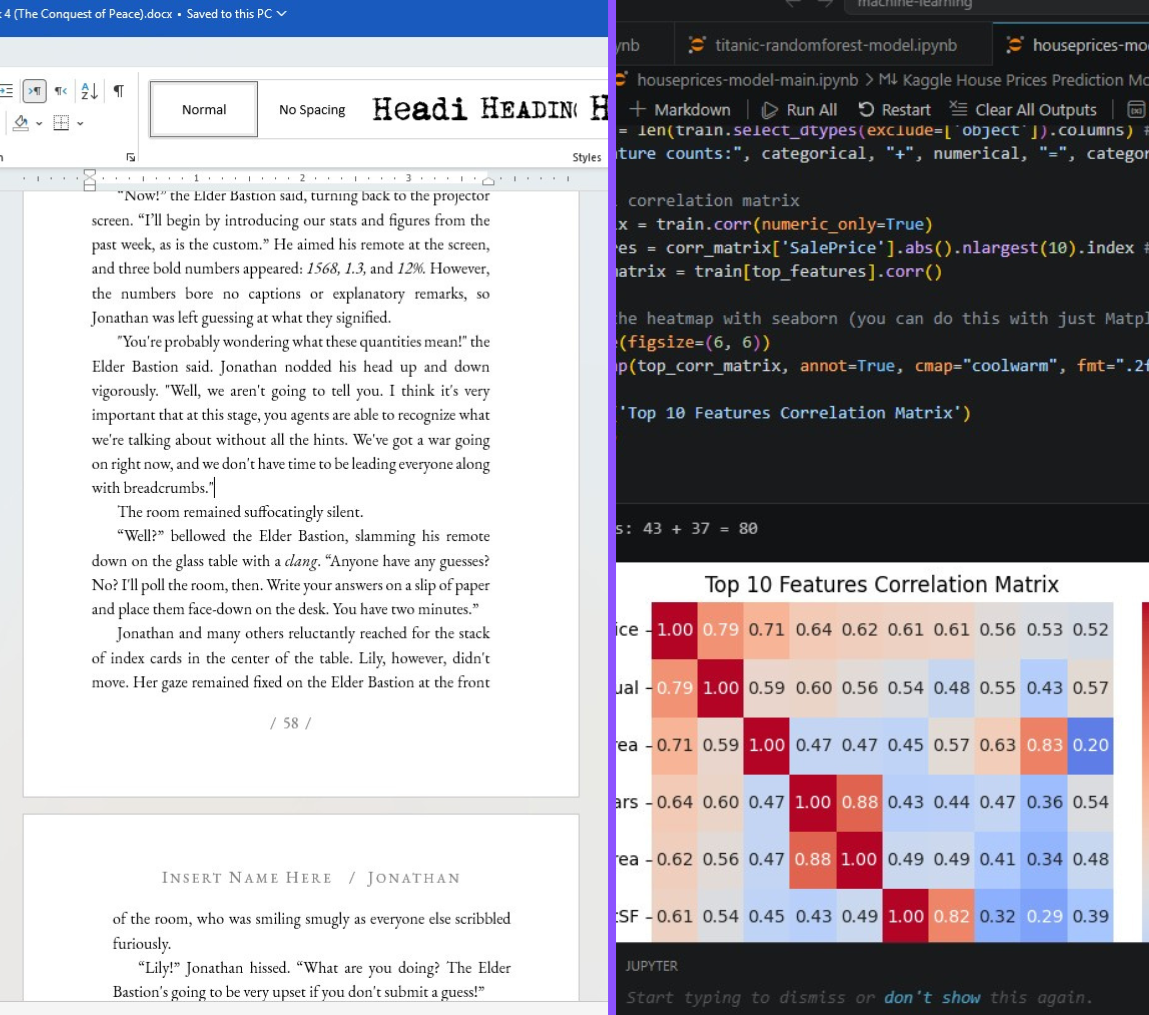
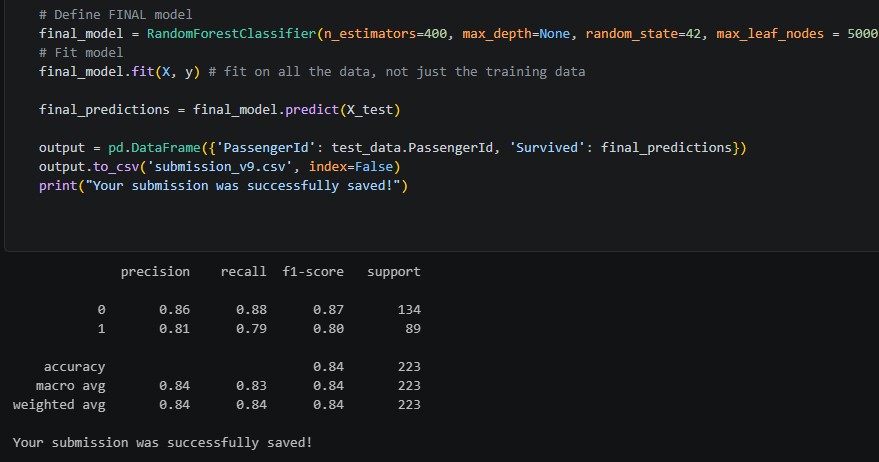
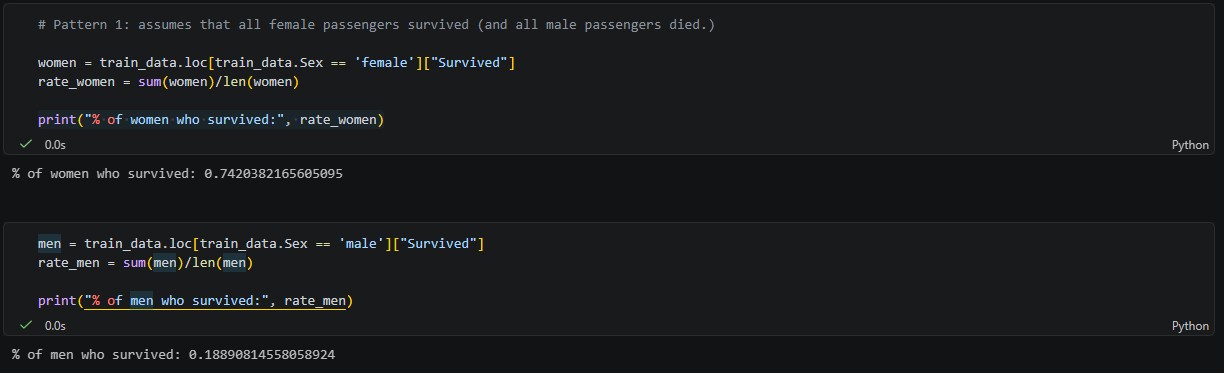
Now that the Quarto site is pretty much done for now, I’ll be looking at (perhaps) designing a custom interface for the HuggingFace embeds, using HTML and JavaScript, so that they can look a little bit better. There’s nothing wrong with them now; however, for the future, it may help if I have even more of a flexible interface. Then, it’ll be straight into Unit 3 of the Practical Deep Learning course. There isn’t any need to continue interating on the painting classifier right now; it works perfectly fine and it’s already been three months since I started the second unit.
I noticed that fast.ai’s Practical Deep Learning for Coders course is woefully outdated in several key areas; notebooks do not work, workspaces are deprecated, and packages are broken entirely. If this becomes prohibitive as I continue to work through the course, I may switch away from this and personally explore some other ML topics. At the same time, I might start a new Intro to Machine Learning course on MIT’s Open Learning Library; most of the content will be a review but it’s good to make sure I’m not forgetting the fundamentals, anyway.
The Alternate Reality Project
“Olivia’s relationship with her brother can best be described as intimate, careful, and at times, playful…she very rarely becomes outwardly upset with other people, [but] will sometimes rant about frustrations to her brother behind closed doors.”
— the Episodic Alternate Reality Narrative, volume 01
I’m guessing that you’re wholly gobsmacked by the above quote. After such a serious, concrete discussion about machine learning models and AI courses, we have . . . what?! A paragraph that reads like it’s from some kind of elaborate personal databse file? No, fear not. This is simply one of the opening sentences of my latest undertaking, the episodic Alternative Reality Narrative, Volume 01, or e-ARN 01.
What is it, exactly? Consider it a space where I’m experimenting what life woud be like now (and in recent times) if things had gone very differently many years in the past. In the narrative, I’m writing prose, third-person descriptions, or brutally-honest observations on life in what I like to call the Alternate/Augmented Universe. Every section and every account in the narrative is designed to sound as real as possible, although it of course is only fiction here in the Prime Universe. Detailed narratives are engineered to read like lengthy Ready Writing prompt responses, except without a clear direction and more focused on the presence of our new alternate-reality character.
And, because this is a bit more than just a narrative, I have created additional artifacts (such as online, for example) that complement the project. Most notable is the Fuzzy Thoughts AoPS blog, which I recently created alongside my prime-universe random ramblings blog as the official writing site of our alternate character. As our character (codenamed claudaroo in the alternate universe) is extremely busy, posts only happen once or twice a week. However, having a dedicated alternate-universe blog allows me to more precisely craft a new character, showcsae their interests, and engage in fictional back-and-forth conversations with them. (There is no other person on the other side of the computer screen, of course. I’m merely playing both sides of the field; skronkmonster is wholly responsible for the creation of the blog).
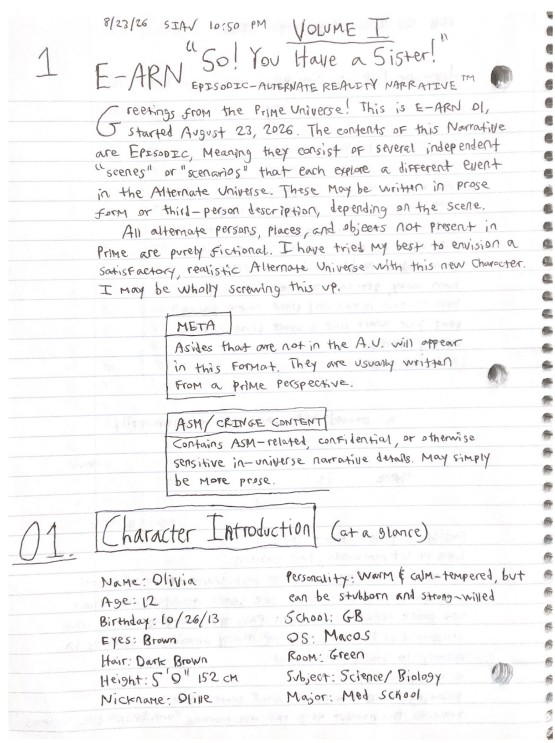
My plan is to focus on the handwritten narrative format (yes, handwritten) and progress through several volumes of the e-ARN 01 to fully develop this character. Why handwritten, you ask? Simply because I feel that I think more creatively while in bed, poised over a notebook and determined to uncover what, exactly, life would be like in this very different Alternate Universe. It’s sort of like superimposing a brand-new individual on top of your everyday adventures, which can be both enlightening, fascinating, and frightening all at once. Shown below is the cover page of volume one, which is currently in progress and set to take up about twenty-one pages. (This all appears in the official SIA Time Capsule Notebook).
Stay tuned for further information on this up-and-coming alternate reality project. It’s one of my most unusual undertakings yet, and I’m excited to see where it goes.
Other Projects
I’m sure there are a whole lot of other things that I’m missing, but one thing I can think of right now is Flames of Rebellion, Book 4. This project has been sort of put on hold, as the AI stuff has taken the center stage and several new submissions and competiton applications have been taking place. That’s not to mention the Labor Day Animal Concert coming up next week, and several new jazz-related musical compositions that actually tie in closely with the alternate reality narrative (yes, everything seems to come back to that lately). So I’m letting the machine learning, the BeamNG.drive video editing, and the various short stories I’m working on take the stage, because Flames of Rebellion doesn’t really have too much of a deadline. (I’d like to try to finish the series before Int-Offshore 2027, but I think that’s pretty unlikely at this point).
I’ve now been a member of the BeamNG Roleplay subreddit for almost four months, which is pretty hard to believe. I’ve not been as active on there lately, but after this weekend, I might have some new posts–and short videos to upload on the main BeamNG subreddit. I’ve been getting into the cutting-up side of BeamNG, and I’ve flagged a new map mod and traffic mod to download for more immersive cutting-up sessions. Bonus points if I can get the insane in-simulation motion blur to cooperate, because that really improves the realism of the whole environment.
Well, that’ll be all for now. Don’t forget to check out the updated AI & Machine Learning Projects page, which now has new links and images. Until then, I’ll see what happens with all these endeavors!