Quite a bit has been accomplished since my last check-in on this site. I’ve kept going on the Blender 3D modeling project of the Toyota Soluna (see the previous blog post for more details), finished Unit 3000 in the New Andaman Beach Villa project (Minecraft), and planning a new complex of forest-located builds on a smaller scale. Among all of this, Flames of Rebellion has cracked 43,000 words, and I predict it’s about halfway to completion now. On top of this, the AoPS Academic Year classes (Algebra 2 in this case) have now started back up. So as you can imagine, things have been a little bit busier than normal!
I’ve also begun a completely new and unrelated project, which I’ll introduce with a single photo at the end of this post.
The 3D Modeling Project
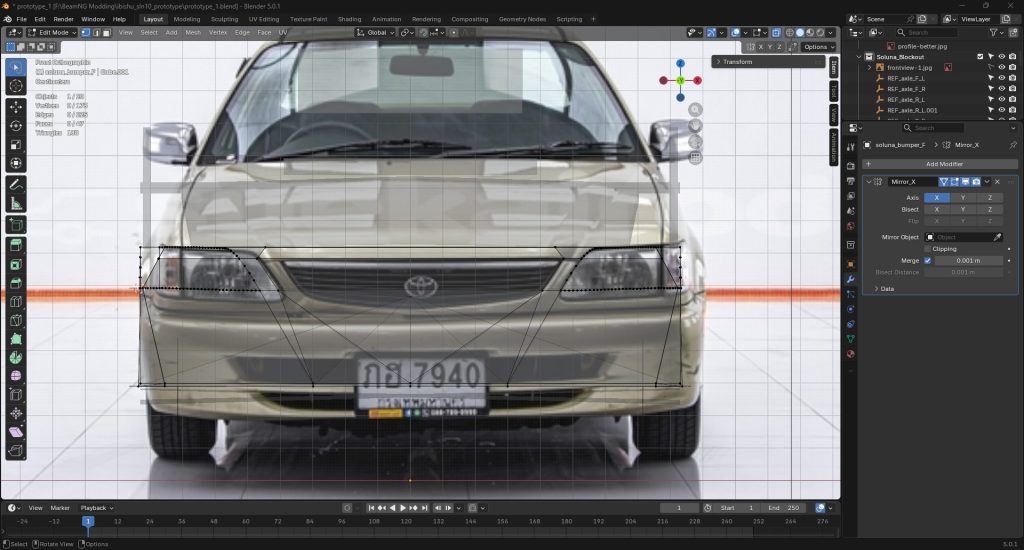
I’ve taken a brief one-day break from going insane in Blender, but over the course of the past week I’ve made significant progress on the front bumper cutouts for the Soluna. On Tuesday, I finished the headlight cutout (or at least the inner portion), after comparing extensively against the photo and subdividing into hundreds of vertices to get the contour right. The grille cutout is also done, although it seems a little crude and I might have to go back and refine it later. The next step will be the turn signal cutout, which extends to the side and wraps around to the other end of the vehicle in the reference photos. Assuming nothing goes catastrophically wrong (which you never know with this project), it’ll probably be another 2-3 weeks before the bumper is done.
Given the speed of this project, I’d probably re-calculate my estimate of finishing the 3D model to next spring or next summer. That gives me plenty of time to do the rear bumper, shape the hood and windshield, model the badges, model the openable doors, and actually set a working interior color (unlike some other Mercedes-Benz C250 mods where you can’t change the interior color!). Of course, the JBEAMING, SCREAMING, and UV MAPPING will need to be done after that, so time will need to be factored in for those advanced processes.
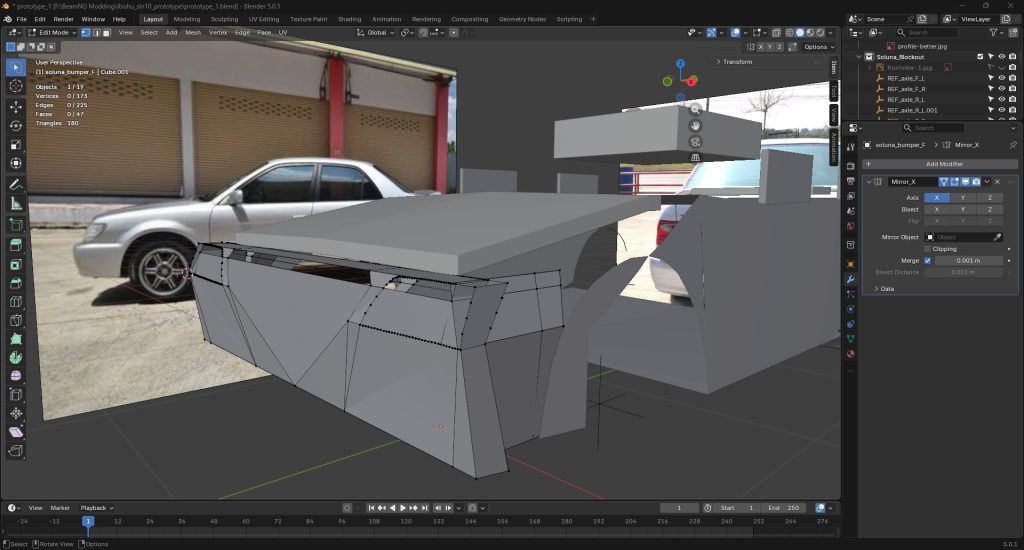
Below is the closer side-view look at the image shown at the beginning of this section, and you can really see all the vertices I’ve added around the headlight cutout to fully shape the area.
Minecraft Projects and Flames of Rebellion
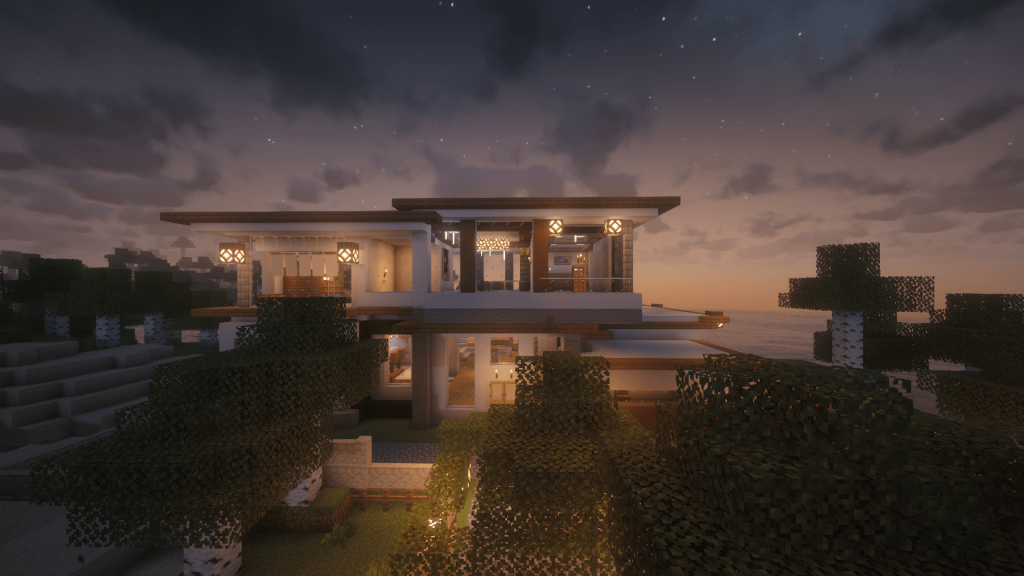
Flames of Rebellion soared to over 43,000 words this week, with more coming every day. This places the book now at 192 pages, which is at about the halfway point considering that this will be another 380-400 page book. I just finished writing a highly intense scene involving Hikotage, who wound up stranded in World Zero after a serious Common Cause attack, and I’m now proceeding to get into some of the most tense parts of the book. I’m still on track for completing the writing portion around November-December 2026, with the publication date to be around January-February 2027 including cover design and proofreading.
However, I can’t really get a definitive estimate on this, because the proofreading for the previous book consumed quite a bit of time (over 8 months) and caused quite the delay in getting the book out. I’m not sure what’s going to happen this time, but hopefully it won’t be a full eight months.
On the subject of the Minecraft projects, I recently finished editing the tour video for New Andaman Beach Villa Unit 3000, and started crafting the floor plans for the next series of forest villas. The tour video is now posted on the official Minecraft Builds website, along with the complete photo gallery. I’m considering remastering the tour video for Unit 1000 as well, but this may not actually occur since I’ll be focusing on building the next few forest villas.
That next project is set to be codenamed the New Andaman Enclave, and will feature much smaller one-story villas when compared to the lush beachfront ones. These will probably come in four to five configurations, both one-bedroom and two-bedroom, and will be nestled in a small complex with plenty of vegetation, right in the middle of the forest. My plan right now is to build four villas per configuration, making a total of around sixteen villas, but this may change depending on the H situation and how much time I have to create these villas. Along with various competing BeamNG scenario projects and calamitous C250 photo-taking sessions, these Minecraft projects may be temporarily pushed to the back burner.
The Mystery Project
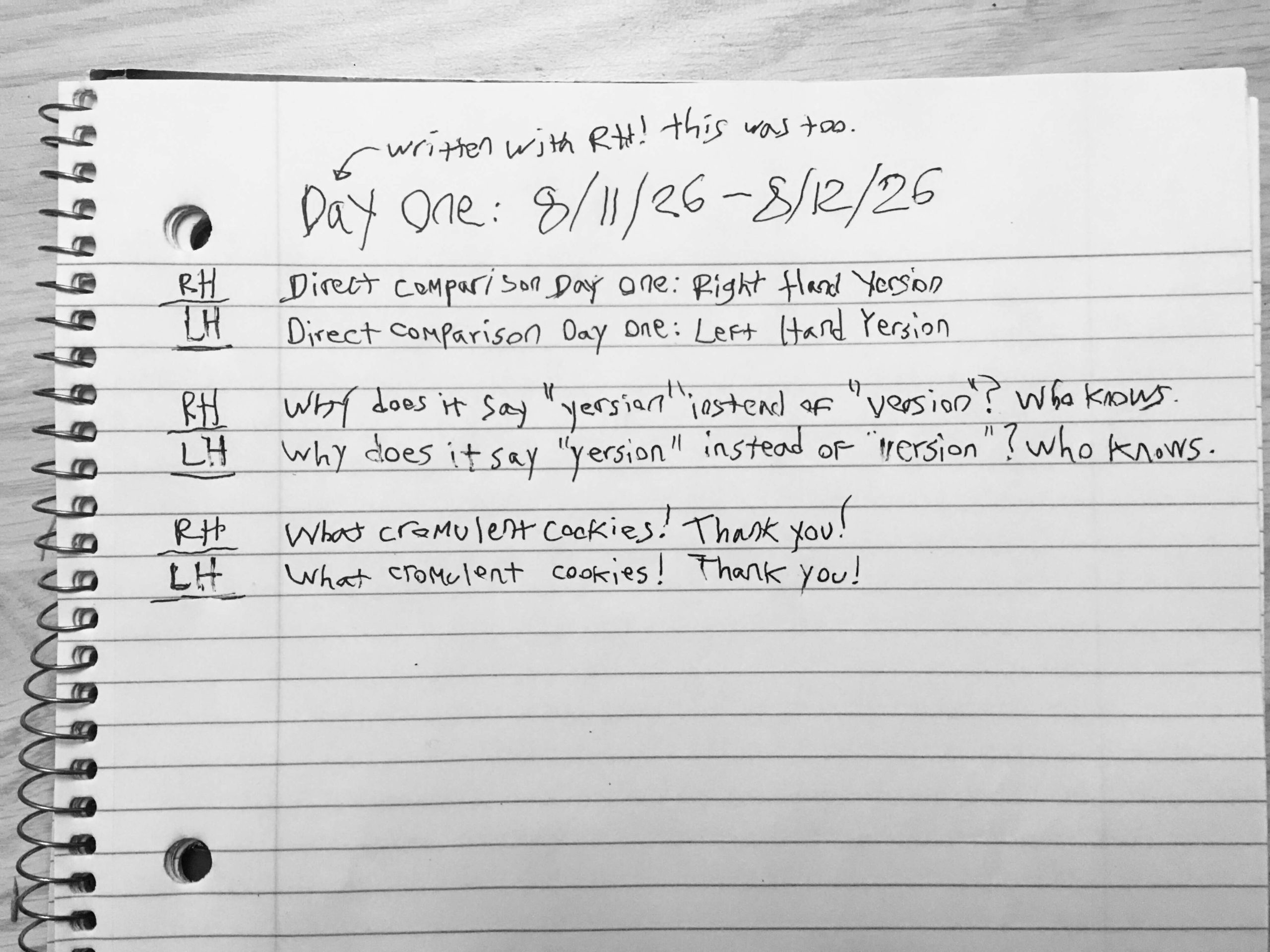
To close off this week’s report, here’s a photo of Day One of my latest Mystery Project. I won’t say what it is yet, but the answer could be revealed in a future blog post. This is another one of my long-term endeavors that are tied to International Offshore 2027 (or so we believe, for now).
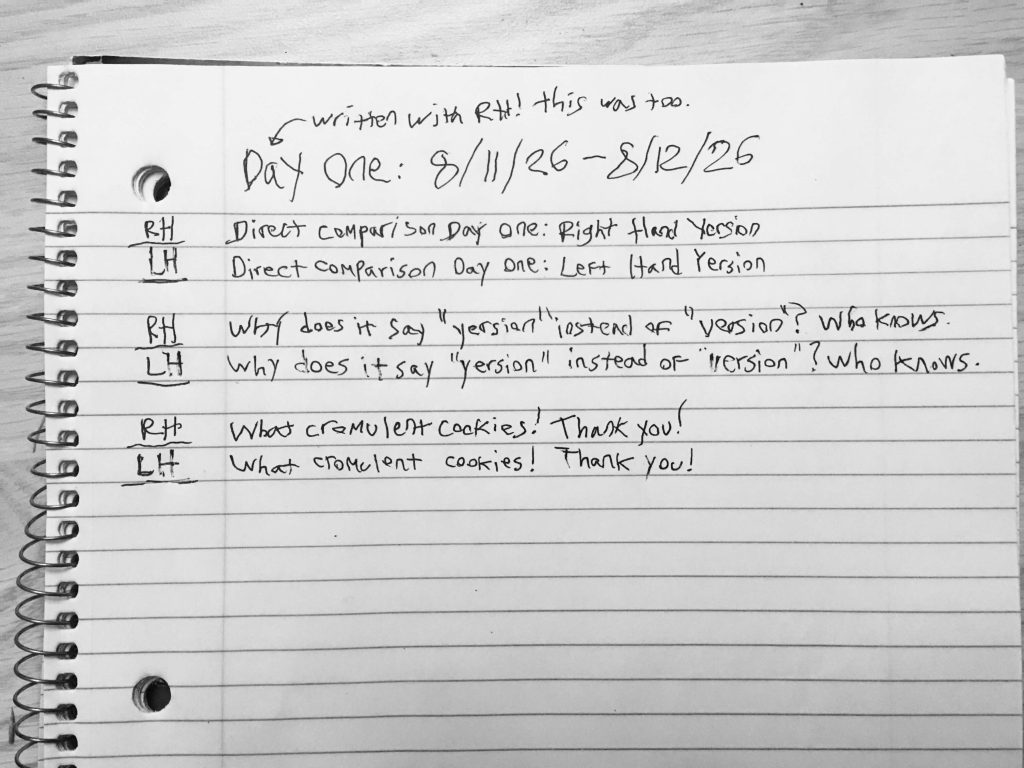
Well, that’s going to be it for this update. Good luck figuring out what the hell is being represented by the above photo!