Written November 2025 for the Scholastic Art & Writing Awards 2026
Award Category: Silver Key (regional)
Length: 2869 words
Genre: Speculative fiction
I remember when we’d go into the field out back, the sun long since faded behind the jagged roof-like mountain-tops. The air would be clear as we crashed across the yard, bound only by the long, meandering creek flowing north. In those days, the clouds were still pristine and puffy, like heavenly cotton balls, untouched by the hungry pollutants and creeping chemicals that now marred their surfaces.
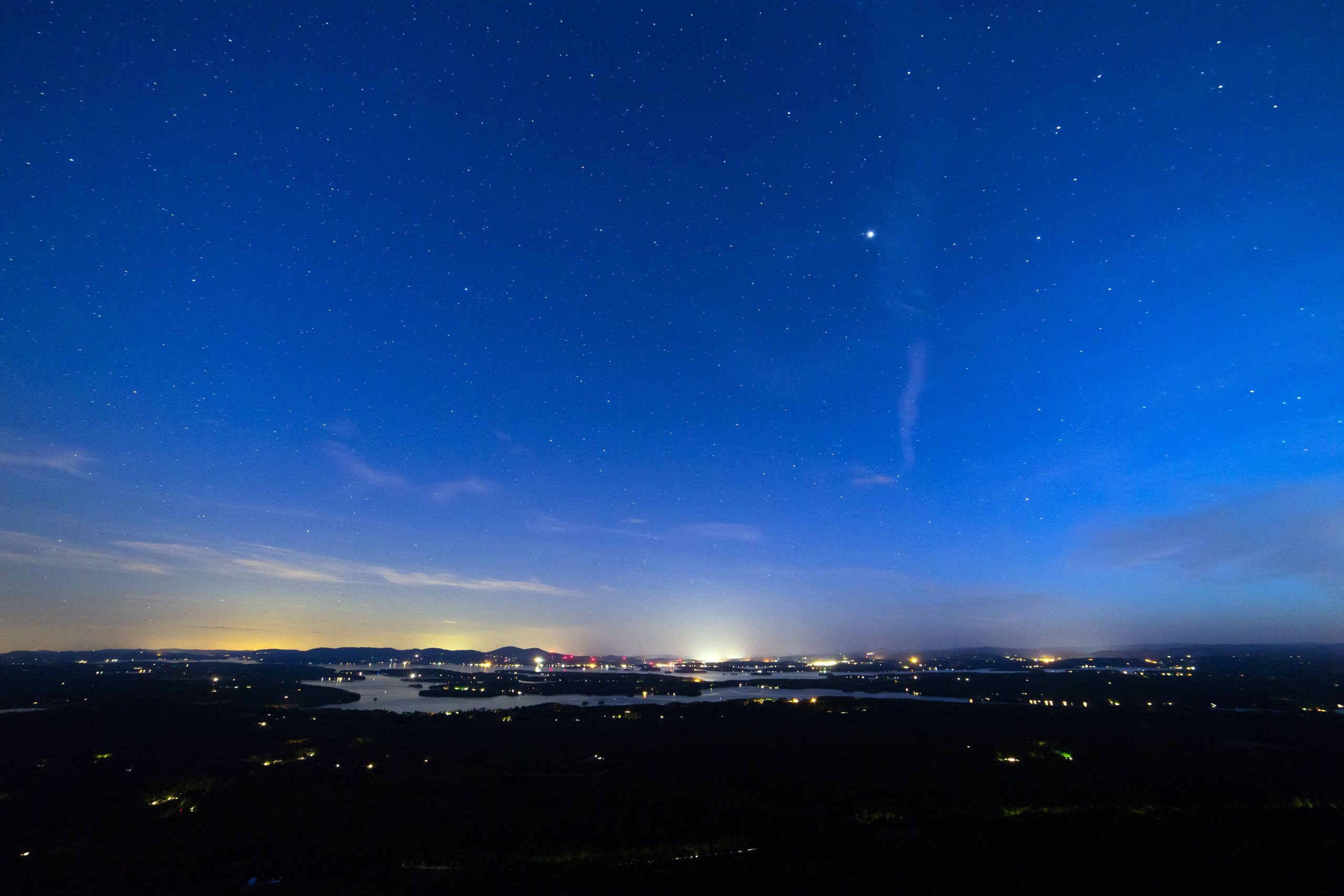
I remember how we’d race each other from the old willow tree at the forest’s edge to the ‘No Fishing’ sign on the lakeshore, tumbling and rolling over ourselves as our spindly legs struggled for purchase on the dirt. We would run and scream until the light gave out entirely and plunged us into the cosmic blackness of the stars, twinkling in tall, different colors like a wall in a lighting store.
And then Mom would poke her head out the back door, announcing that we had better get back inside now or our dinner was going to freeze like a pool in Antarctica. One of us—usually you—would say, “Aw, Mom, why do we have to eat already?” And so it would go, on and on, back and forth. On some nights, it would get so bad that she’d have to come out and physically drag us into the kitchen.
This was before everything, of course. Before the world ate itself alive with its own madness, seemingly extinguishing its inner life force forever.
* * *
The news report, as usual, is gloomier than a funeral. Maybe it’s even bleaker than the clouds that hang like soiled sheets over the house, dripping their brown, acrid rain into the mountains. I don’t bother to turn down or turn off the news-bot, because I know it will start up again in a few minutes, like an infinite game of whack-a-mole.
So I let it scream its morbid computerized heart out, cry its tears of cooling fluid onto its pedestal. All the while, the thunder is getting louder, angrier—except it’s not really thunder these days, more like anguished cries—as if it’s trying to compete with the news-bot, trying to see who can come the closest to opening the gates of hell.
“Plane crash in New York kills one hundred thirty!” it bawls, shaking like an off-balance washing machine. “Air traffic controllers and majority of USPS employees still on strike! 9.1 magnitude earthquake kills, injures thousands in Southern California!”
Just as it seems like the news-bot is overpowering the thunder and screaming forth its victory, there’s a hollow click from the labyrinthine circuits of the house, and the lights cut off. The emergency lanterns and candles are on in a second, flooding the shadow-riddled house with light.
I move upstairs and into the master bedroom—a haven of security and quiet in troubling times. But now the ceiling has caved, and black raindrops are squeezing their way in, collecting into black puddles on the carpet. The rumbling and screaming of the heavens is louder than hell up here, maybe because the ceiling is on its way out, maybe because of the higher elevation.
There’s a small side table shoved into a corner of the room, its scratched wooden surface bearing the weight of two lamps and a stack of heavy books. Under the night-table and on a pile of old blankets is primarily where I sleep, because the bed can only take so much weight, and you don’t want to share it with me anyway. It didn’t used to be like that, of course, not in the old days. Not in those fleeting final years at our parents’ house, before the pollution and the chemicals took over.
I’m dreading the moment when you come home from the café, because downstairs the news-bot has just announced the bankruptcy of AmeriCorp Foods, the company that owns the place where you work.
* * *
“Names are like personal anchors,” Mom used to say to us, particularly on the harder days of life. “They’re supposed to bring us back to reality when we lose control of ourselves, telling us who we are—who we still are—at heart.”
I never really understood the meaning and significance of her words until much later, when the government stripped everyone of their names, replacing them only with randomized combinations of words like usernames on a website.
We all still remember our original names, though. At one time, I was Felix, and you Stella. But no one will ever call us by those names again—at least, no one but you, me, and our parents in private conversation. To the cashier at the Highland County Market, I’m Citizen WanderingOak, and you’re Citizen JumpingGrasshopper. As far as the government is concerned, our given names never existed—purged from all federal records by thousands of merciless data-scrubbing robots.
No one knows exactly why they took away our names. The letter simply came in the mail one day, adorned with glaring bald eagles and Doric columns, consigning us to the government-issued nomenclature we would bear for the rest of our lives.
Sometimes I strain my mind and try to remember what it was like to have a personal name, what it was like to recognize others’ names when they were more than labels. It wasn’t that long ago—eight, ten years at most—but it feels like an eternity.
That’s what oppression and misery will do to you, I suppose.
* * *
The United Empire of America. Smooth, serif words underneath the country’s seal, or what is left of it: three bald eagles perched atop a black Doric column, grinning devilishly down at a slight variation of the Confederate flag. It isn’t comically imposing or grandiose so much as stupid. Yet it is a stupidity that carries influence, because thousands of people around the world revere it.
These abominations appear at the top of your termination letter, which arrived by mail just minutes before you pulled into the garage. Below them is a lengthy paragraph of text that cuts holes into my eyes like pocket-knives. In a way, they are: inexorable weapons of totalitarian command wielded by the denizens of New Capitol Hill.
This letter concerns your present termination from your position at Highland County Creamery and Shakes, announces the letter’s first sentence. We deeply apologize for any inconvenience this may have caused. You are encouraged to apply for a Need-Based Limited-Use Employment Stamp today.
I know you’d sooner burn in hell than do that.
“Terminated!” you scream, throwing the letter in my face as if it’s somehow my fault. “Well, I guess I shouldn’t be surprised. Everything’s a damn mess these days.”
There’s no mistaking the yearning in your voice, the longing for a better world in which survival and stability are taken for granted.
A deafening clang issues forth from someplace in my peripheral vision. “Felix! You forgot to put the pasta on the stove again!”
“Not like it matters. The stove quit working when the power went out.”
Curses erupt forth from your mouth faster than my ears can process.
This is the way life is nowadays: argue, complain, forget, misplace, repeat. There is no joy in anything, no, not the minutest inkling of light in this infinite dark tunnel. All acts of kindness are repaid with hate. The economy is no more than a bartering system that rewards malice and punishes the compliant. In the seven, or maybe eight, years since we moved into Highland County, we have slowly watched our lives—and the world—collapse, piece by piece, law by law.
And we will continue to look on helplessly as the world implodes, because there isn’t anything we can do. All we do around here is sit around, eat processed chicken, sleep, and suffer. And damned if we’re going to be able to do that for much longer, with you being out of a job.
I sigh. “Well, put the stupid—”
Suddenly, there’s a massive boom from somewhere upstairs, like the footfall of a primordial demon who is rising from years of slumber. Fifteen years ago, I would have dismissed the strange occurrence as a particularly loud peal of thunder. Today, it’s much more likely that a cloud has burst—a recent natural phenomenon, we were told, arising from the multitudes of pollutants constantly being dumped into the heavens.
“Did I tell you the ceiling is about to cave in the upstairs bedroom?” I say, barely above a whisper.
Funny how your own planet can turn against you.
* * *
When you really think about it, things started going bad around the time we moved out of Mom and Dad’s house. This was over fifteen years ago, maybe twenty. In those days, climate change was still under control, more or less, although it was clear that one wrong move by humanity as a whole would send the planet snowballing into destruction. The sun still shone with reverent energy onto the rolling hills of Shelby, Montana, not yet ashamed of the abusive humans it illuminated.
I remember the day we moved out, awash among a sea of cardboard boxes and bittersweet hugs. Dad was talking frantically in Japanese on the phone, ostensibly to his brother or parents, because he and Mom were going to move to Japan after you and I went off to college. Some monumental argument was taking place, although I don’t remember what it was about.
“Stop acting like such a baby,” I recall teasing you as you cowered in a dark corner of the moving van on your phone.
“I’m not,” you had said, laughing. “I’m just texting my friends. Also, you’re out here too—that doesn’t make you any less of a baby!”
I sat down on the chrome bumper of the van. The sun was setting then, throwing shafts of light through the treetops lining our narrow street. A few doors down, somebody must have been having a barbecue, because the familiar smell of grilling burgers floated lightly on the late-summer breeze.
“You’ll call me,” you said, almost out of nowhere. “When you arrive, and every day from that point onward. You won’t forget, right?”
We had been accepted to different universities—two that were at least an eight-hour drive apart from each other.
I shook my head. “Not if you won’t.”
Sometimes I wonder how we went from those days—from ordinary Japanese-American siblings in backwoods Montana—to a world fraught with Need-Based Limited-Use Employment Stamps, frowning eagles, and a collapsing environment. Months after our first semester started, the takeovers started happening—first at state levels, and then in federal offices. Before long, the country was riddled with corruption up and down the ranks, permeating even the darkest corners of the government.
Yet, for a time, the world still squeaked on like the well-oiled machine it was, unaware still of the hellish precipice off which it would soon drop. We had both been accepted to prestigious universities, and in those days, there was nothing more inviting than the prospect of a long, full life, of the next chapter in our continuing stories.
Until the pages of that chapter went up in flames, extinguishing our hidden hopes like twinkling stars succumbing to the darkness, one by one, by one million.
* * *
“There’s no way we’re getting somebody out to fix it within the next month,” you say tersely as we pound back down the stairs, away from the collapsing bedroom and the buckling roof. “All the emergency repair people are on strike. And they will be until something changes in the labor economy. Which, at this rate, will never happen.”
“Looks like we’ll be sleeping on the pullout in the living room for the foreseeable future,” I reply grimly as another hammering thunderclap and a torrent of angry black rain seem to split my head down the middle.
There’s a tense, awkward silence as you unfurl the old, flattened twin bed from the innards of the sofa.
“Northwestern burned down the other day, did you hear?” you say, as much to the bed as to me.
“Of course I did. How could I not, with the stupid news bot going off all day?”
The room remains silent for a count of ten—so silent our only companions are our heartbeats, and the deathly pounding of rain and thunder outside.
“They’re both gone now, you know that?”
You’re right. Both of the universities we had once attended, back when there was still hope for intellectualism, have now succumbed to the fury of Mother Nature. Most of the older institutions, in fact, have now fallen to the steel-rending combination of acid rain, forests drier than a desert, and temperatures hotter than hell. And occasionally, there is the organized band of arsonists as well, or shooters, who swoop like hawks upon anything that defies their rabid beliefs.
“I gave up on nostalgia a long time ago,” I tell you solemnly. “When it becomes too painful to look back on the past, because the world around you is constantly collapsing, you stop trying to do it.”
CRAAACK. Another deafening blast of thunder—or a burst cloud.
“Well said, Socrates,” you say when the world stops shaking. “And you never thought about being a philosophy major? Sometimes I feel like . . . you have that capacity for abstract thought that everyone needs more of right now. I’m too brutal and hard-headed, which isn’t doing anyone any good these days.”
You’d once aspired to be a computer systems engineer and had even graduated from college as a computing major. But then along came turbo-generative AI, and humanoid mechanical engineers, and the IT industry as a whole soon succumbed to the power of artificial intelligence. So you were left scrambling to find a job, to get paid enough to survive. Until today, that job had been a POS system manager at the local coffee shop. But now that is gone, too.
“I don’t know,” I say. Being a math major, the idea of philosophy leaves an acidic taste in my mouth. “But I guess that sometimes in math, especially if you’re working on a complex proof or problem, you need that abstract thought too.”
“That’s a good—”
Before you can finish what you’re trying to say, there’s an earsplitting SCREEAACH from all around us, the kind of high-pitched sound that drills into your bones and eardrums all at once. Goosebumps rise on my arms, and a sudden chill washes over me that reminds me somewhat of falling into ice-cold water. The candles and lanterns flicker, like broken street-lamps, before puffing out entirely—which makes no sense, because they run purely on battery. The only possible explanation would have to be . . .
“Solar storm?” you ask.
I nod. “Solar—”
BOOM.
Everything explodes at once: you, me, the candles, the kitchen counter, the goddamned news-bot, the house. At first, I think we’ve been struck by lightning, a chance occurrence in past times that has slowly been increasing in likelihood. But there’s no scent of ozone, no fires springing up in the shattered remains of our home.
Instead, there’s only blackness.
I wonder if this is what it’s like in the final hours before death. Because there’s nothing to fill the emptiness that seems to be so ubiquitous here—no sound, no tastes, no smells, I can’t even see you anymore. Maybe I really am dead.
Or maybe the world is dead.
And then, out of the blue, there’s a flash of light from somewhere off to my right. I realize it’s the glinting of a glassy eye in the darkness, maybe a human eye. Everything is so dark that even the tiniest pinpricks of light are amplified tenfold, so I suppose it could have been anything.
Then I realize the eye belongs to you—because you’re floating inches away from me, the skin on your face whiter than silk, frozen like a snowflake. Your arms hang limp in the soggy blackness, like you’re weightless in water. There’s something nauseatingly familiar about this—about the infinite black void, about the weightlessness. Like I should know where we are, but my brain is too frozen solid to catch up.
Something else catches my gaze—another flash of light, it seems, except this one is much brighter. I can’t seem to move a single muscle in my body, so I have to wait, hoping an ambient wind rotates my head to face this mysterious light source.
And as little twinkling specks of light emerge from the gloom, like old lamp-posts in the night, I recognize where we are. It’s the same unreachable frontier that hovered over our heads on those bygone evenings, that stared down on our insouciant lives as we sped from the ‘No Fishing’ sign to the lake, day after day, year after year.
Now we’re here—both of us, I remind myself, as your paralyzed body floats past me in a haze. My lungs are convulsing, my skin hardened from the chill. I know it will only be a matter of seconds before I expire, too.
I’m not really sure how we got here, or why we’re here. Maybe it’s Mother Nature’s way of sparing us from her own wrath. Maybe others were ejected, too.
The last thing that flickers across my eyes is the fiery orange-red glow of the sun. And then my body freezes, freezes like a pool in Antarctica.
Inspirations and Comments
This is a classic dystopian story, filled with all manner of depression and ruthless about making the reader want to punch out a window. However, These Extinguished Dreams takes the common dystopian trope a bit further. In writing this short story, I wanted to end on an unexpected note, to conclude with a bang and a shower of translucent fireworks. Instead of killing off the characters and having the entire world implode, I decided to take the characters with the story and come full-circle from the story’s opening amidst nature.
In case you didn’t notice the header, I entered this story into the 2026 Scholastic Art & Writing awards, in the Speculative Fiction category. This was the first time I’d participated in the Art & Writing awards. I’d heard it was one of the most prestigious and difficult writing competitions available; after all, it was, at the very least, regional-level (with the opportunity to advance to national). Starting in August 2025, I began writing extensive and scatterbrained drafts of various ideas, pushing out scenes from night bazaars in unsafe locations to creepy-old-neighbor horror stories in the style of Faulkner. Almost all of them got sent to the trash can within a few weeks. Even by the time I started writing what would become the final draft, I didn’t expect to win anything. I didn’t even think the story was that good when I carted it off to the Submit Piece form in early December 2025.
But then I received word, in March 2026, that the story had somehow won the Silver Key award. While it was unable to advance to the national level, it was still recognized among the thousands of submitted stories in the Region-at-Large South section. So that was definitely a bit of a surprise, given the fact that I’d thought the story was much too formulaic and nondescript when I submitted it.
However, I suppose that if you were to conduct an in-depth analysis of this story, maybe even perform a full, annotated Literary Analysis on it as if you were doing it for an assignment, you might uncover some of the hidden elements. For this story–and a few of the others I’d written during this time period–I used an active, engaging writing style told in the first person. I find that this perspective, especially when combined with the present tense, offers a highly personal feel that makes the reader feel like they are right there, standing in all of the scenes. I made sure all the dialogue in this story was as realistic as possible, attempting to channel the frenzied emotions of Felix and Stella in the most vivid ways. There are definitely a few sections, though, that I think could be improved: for example, their discussion of the universities (especially starting with the too-ambiguous line “They’re both gone now, you know that?“) seemed a bit tacked-on and disjointed.
On the whole, though, I think This Extinguished Dreams was a success–especially after all those revisions, failed drafts, and trashed stories. I’m planning on participating in the Scholastic Art & Writing awards again next year, for 2027. And who knows? Maybe by the time you’re reading this, next year’s submission is already hanging up on this website.