If you’ve been following the last few blog posts closely (and by last few, I mean the ones discussing the January New York trip), you’ll probably know that this week has been reserved for a Carnegie Hall performance and an Ivy League College Tour. The first portion of this trip, the Carnegie Hall recital, has now completed (see this blog on my Substack to read more about it). Now we’ve completed the first day of the college tour, and two more days await.
In this Discordant Harmomy blog entry, you can read more about our adventures on the East Coast on Day One of the college tour, in which we visited the prestigious Yale University and Brown University. If you don’t see any photos right now, that probably means we’re still trying to get them added and set up.
Yale University (Score: 4.8 / 5)
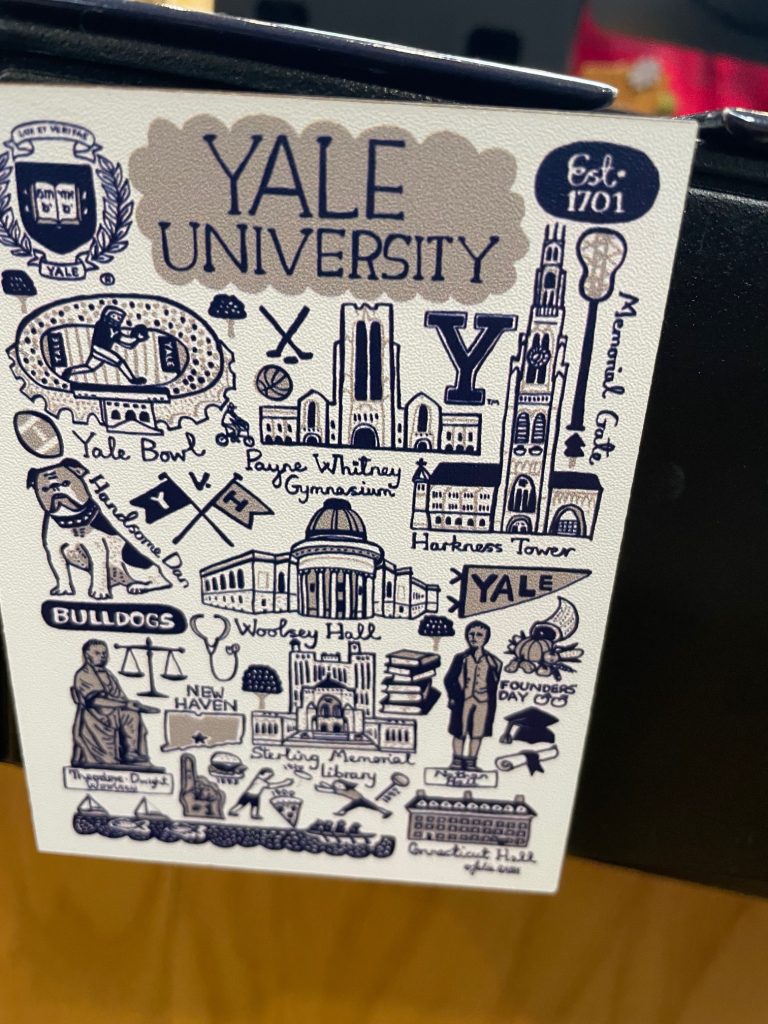
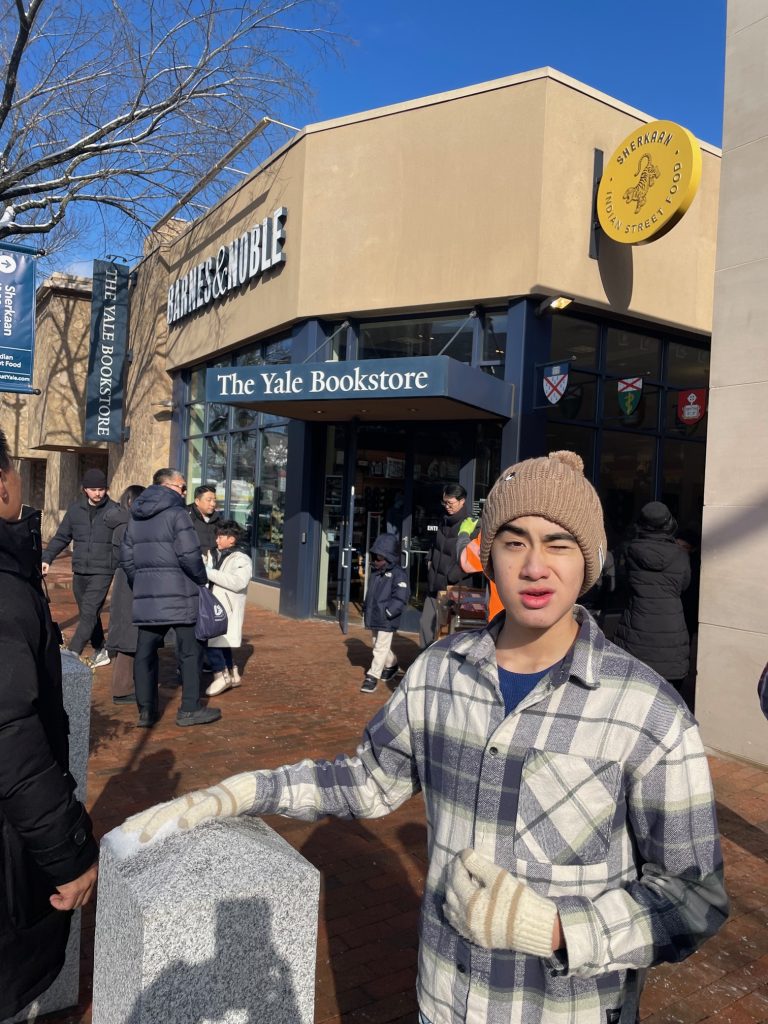

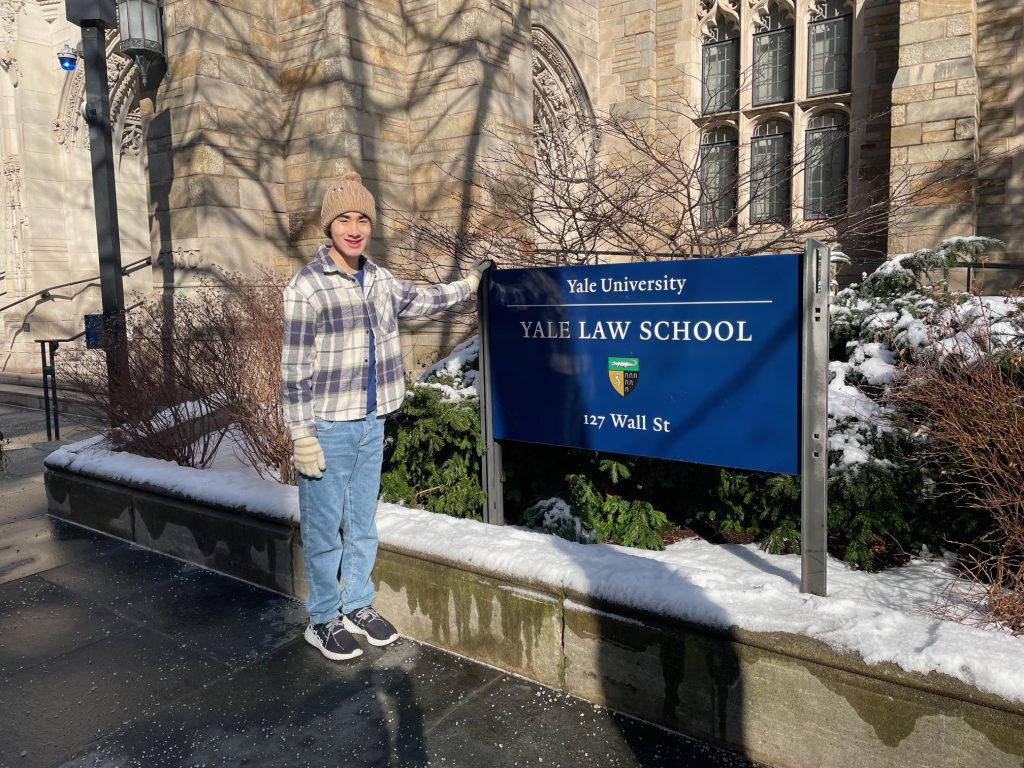
Our first stop on Monday, the first day of the college tour, was the prestigious Yale University. Located in the heart of New Haven and built in 1701, it’s known for its advanced graduate Law School and for its liberal arts programs. It also has a flexible curriculum and a music program, in addition to several libraries containing ancient artifacts from all over the world. We visited several of the buildings on the Yale campus today, going inside a few of the more prestigious buildings and taking photos of the statues.
Yale’s campus is spread out over the entire city of New Haven, and this immediately stuck out to me when we commenced the tour. Buildings are arrayed across several blocks in the city, creating an interesting kind of aesthetic that’s highly unique. It can sometimes take quite a walk to get frmo one end of the campus to another, but it’s also refreshing to live on a campus with so much open space–lawns, greeneries, embedded parks–rather than one that’s extremely tightly packed.
United Kingdom universities, such as Cambridge and Oxford, helped to inspire the architectural style of the Yale campus. Its sweeping roofs and grand, imposing halls have roots in Neo-Gothic architecture, which emerged in the early 1700s. There’s even a clock tower on campus that looms over all the other buildings, providing students an opportunity to join the bell program and play their choice of songs. We also saw an underground library accessible through a secluded staircase, which looked like a great opportunity to get some quiet studying done.
Nothing outmaches the importance of Yale’s historic artifacts, as evidenced by the campus’s windowless and unordinary library. Perhaps the most surprising–and fascinating–part of the tour was our visiting of this building, where ancient artifacts and books are stored, shielded from the UV light. The books and items are so delicate that students must request the titles in advance to be delivered to a special reading room (the books themselves are stored in isolated boxes) and have a limited amount of time to read them. And, if there’s ever a building fire, the oxygen must be sucked out of the library to preserve the books, giving anyone still inside only one minute to escape.
Having visited Harvard, MIT, and Brown University in addition to Yale, I’d definitely say that Yale outranked all of them, not just in architectural design and campus layout but in their diversity of careers. (Yale also has an incredible downtown area with a great pizza and pasta shop!) There’s the famous Yale Law School, yes, but there’s also a music division and the renowned Yale School of Medicine. There are several career paths available, which is something that I try to look for when exploring colleges and universities.
And now, onto the second university of Day 1–Brown. Time to leave Connecticut and visit the picturesque Rhode Island!
Brown University (Score: 4.0 / 5)
Photos coming soon…
Our second stop on Monday was Brown University (yes, we’re running a couple colleges behind on the logs here). Established in 1764 (a few decades after Yale), it’s located in College Hill, in Providence, Rhode Island. There was some incredible scenery on our drive up from New York to get to the Brown University area, and the town surrounding the campus is quite nice in January (except for the cold, of course).
Not surprisingly, Brown University was relatively similar in layout to a couple of the other colleges we’d toured (Harvard, for example). However, it was much more tightly packed than any of the others, especially Yale. Many of the buildings were confined to a central area, rather than being spread around the town as with New Haven. The architecture didn’t come across as quite as impressively as with Yale, but more importantly, I didn’t get the same feeling of diversity and openness of career choices as with the other universities.
Although we weren’t allowed to enter any of the buildings on the Brown campus–as with Yale–we did end up getting brief looks at some of the statues on campus. For example, the mascot of the Brown university is the bear. There’s a large bear statue on campus, so we all took photos there. Some of the other statues were interesting and notable, but on the whole there didn’t seem to be as much green space and open areas as with the other few colleges.
Here’s the question–which of the two colleges mentioned in this first blog post seem to have the better experience for students, whether having to do with open campus areas or diversity of instruction? At the moment, the winner seems to be Yale University. We have two more colleges to visit on this tour, but there are still two that have yet to be covered on this blog. So–stay tuned for further information!
Leave a Reply